Best Video Card Under $200 (2026)

We earn a commission when you buy through our links, at no extra cost to you. As an Amazon Associate I earn from qualifying purchases.
Quick answer
Choose the XFX Radeon RX 580 GTS XXX 1386MHz if you want an 8GB GDDR5 card with VR ready support and dual BIOS for gaming under $200. Its 1386 MHz OC boost clock and double dissipation cooling suit virtual reality content on a PC. The 51RISC GTX 1660 Ti pairs 6GB GDDR6 with a 1785 MHz boost clock, and the MOUGOL and maxsun RX 580 cards hold 8GB GDDR5 each.
Ranked at a glance
| # | Product | VRAM | Boost clock | WiseScore | Link |
|---|---|---|---|---|---|
| 1 |  XFX Radeon RX 580 GTS XXX 1386MHzBest Overall | 8 GB | 1.39 GHz | 9.7/10 | Check on Amazon → |
| 2 |  51RISC GeForce GTX 1660 Ti Graphics CardSecond Pick | 6 GB | 1.78 GHz | 9.5/10 | Check on Amazon → |
| 3 | 8 GB | — | 9.4/10 | Check on Amazon → | |
| 4 |  maxsun AMD Radeon RX 580 8GB 2048SPAlso Consider | 8 GB | — | 9.3/10 | Check on Amazon → |
| 5 |  EVGA GeForce GTX 750 Ti FTW DVI-I/HDMI/DisplayAlso Consider | — | 1.27 GHz | 9.0/10 | Check on Amazon → |

The lineup, one by one
XFX Radeon RX 580 GTS XXX 1386MHz
The XFX RX 580 GTS XXX pairs 8GB GDDR5 with a 1386 MHz OC boost clock, dual BIOS, and VR ready support.
Why #1: No single top figure here; its WiseScore comes from its overall specs plus Amazon sales data.
- VRAM
- 8 GB
- Boost clock
- 1.39 GHz
- Warranty
- 3 Years
Good fit if
- You want 8GB GDDR5 for virtual reality content
- You want dual BIOS and 3xDP, HDMI, and DVI outputs
Look elsewhere if
- You need the 1785 MHz boost clock of the 51RISC
- You need the 125 W power draw of the 51RISC
This XFX card uses the Polaris architecture with 4th gen GCN graphics cores on a 14 nm FinFET process. Its 8GB GDDR5 memory runs at a true clock of 8.0GHz, with a boost OC of 8.1GHz, and the GPU runs at a 1366 MHz true clock and a 1386 MHz OC. Double dissipation cooling keeps the card cool, and the minimum power requirement is 500 watts. AMD VR ready support pairs the card with leading VR headsets through AMD LiquidVR technology for a low latency virtual reality experience. Dual BIOS and outputs of 3xDP, HDMI, and DVI complete the configuration. A 3-year warranty covers the card.
51RISC GeForce GTX 1660 Ti Graphics Card
The 51RISC GTX 1660 Ti pairs 6GB GDDR6 with a 1785 MHz boost clock, dual fans, and a 125 W power draw.
Why #2: Top figure in this lineup for boost clock (1.78 GHz). The rest of its WiseScore comes from Amazon sales data.
- VRAM
- 6 GB
- Boost clock
- 1.78 GHz
- Power draw
- 125 W
Good fit if
- You want 1080p gaming from a 6GB GDDR6 card
- You want dual fans for quiet operation while gaming
Look elsewhere if
- You need 8GB GDDR5 of the XFX RX 580
- You need a white card for a white theme PC build
This 51RISC card runs a GTX 1660 Ti GPU with 6GB GDDR6 memory, a 1500 MHz GPU clock, and a 1785 MHz boost clock. Its power draw is 125 W maximum, and it connects through PCI-Express 3.0 x16 with an 8-pin power supply. Display outputs are 1x DVI, 1x HDMI 2.0, and 1x DisplayPort 1.4a. Blade dual fans move more air for quiet operation. The card suits 1080p gaming, and the box holds the graphics card and a user manual.
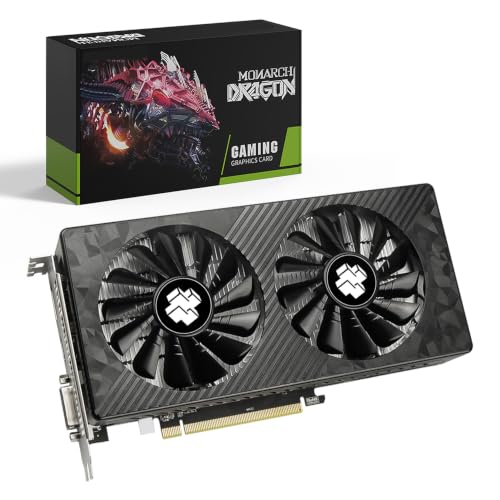
MOUGOL AMD Radeon RX 580 8GB GDDR5 Gaming Graphics Card
The MOUGOL RX 580 pairs 8GB GDDR5 with a 1206 MHz core clock, triple-monitor outputs, and dual-fan cooling.
Why #3: No single top figure here; its WiseScore comes from its overall specs plus Amazon sales data.
- VRAM
- 8 GB
- Warranty
- 1 Year
Good fit if
- You want triple-monitor setups from HDMI, DP, and DVI
- You want 2048 stream processors for Fortnite and GTA V
Look elsewhere if
- You need the 1785 MHz boost clock of the 51RISC
- You need the 3-year warranty of the XFX card
This MOUGOL card runs an AMD Radeon RX 580 GPU with 8GB GDDR5 memory, 2048 stream processors, and a 1206 MHz core clock on a 256-bit interface. Its triple output array covers HDMI, DisplayPort, and DVI for triple-monitor setups. The card measures 240x135x45mm and fits standard ATX mid-towers and micro-ATX cases. A dual-fan cooling system with high-efficiency heat pipes keeps performance stable, and intelligent fan control stays quiet during light office work. DirectX 12, Vulkan, and OpenGL 4.6 support hardware acceleration for video editing in Premiere Pro and 3D rendering in Blender. A 1-year manufacturer warranty covers the card.
maxsun AMD Radeon RX 580 8GB 2048SP
The maxsun RX 580 2048SP pairs 8GB GDDR5 with a 256-bit interface, DirectX 12 support, and a white finish.
Why #4: No single top figure here; its WiseScore comes from its overall specs plus Amazon sales data.
- VRAM
- 8 GB
- Warranty
- 3 Year
Good fit if
- You want a white card for a white theme PC build
- You want 8GB GDDR5 with 4K video decode and encode
Look elsewhere if
- You need the 1206 MHz core clock of the MOUGOL card
- You need a 125 W power draw for a less than 500W PSU
This maxsun card runs an AMD Radeon RX 580 2048SP GPU built on the 14 nm process with the Polaris 20 graphics processor in its Polaris 20 XL variant. Its 8GB GDDR5 memory uses a 256-bit interface. The white card suits a white theme PC build. Three full digital video outputs, HDMI plus DP plus DP, extend across multi monitors. DirectX 12, Vulkan, Shader Model 5.0, and OpenGL 4.6 and 4.5 support modern games, with 4K video decode and encode. A 3-year warranty covers the card.
EVGA GeForce GTX 750 Ti FTW DVI-I/HDMI/Display
The EVGA GTX 750 Ti FTW pairs a 1268 MHz boost clock with 2GB GDDR5, 640 CUDA cores, and ACX cooling.
Why #5: No single top figure here; its WiseScore comes from its overall specs plus Amazon sales data.
- Boost clock
- 1.27 GHz
Good fit if
- You want ACX cooling in a 9-inch plug-in card
- You want DVI-I, HDMI, and DisplayPort outputs on one card
Look elsewhere if
- You need 8GB GDDR5 of the XFX RX 580
- You need 6GB GDDR6 of the 51RISC card
This EVGA card runs a GeForce GTX 750 Ti FTW GPU with a 1189 MHz base clock and a 1268 MHz boost clock. Its 2GB GDDR5 memory runs at a 5400 MHz effective memory clock on a 128-bit interface with 86.4 GB/s memory bandwidth. The card carries 640 CUDA cores and ACX cooling technology. DVI-I, HDMI, and DisplayPort outputs cover three display connections. The card measures 9 x 1.5 x 4.4 inches as a plug-in card, and the recommended power supply is 400W or greater.
Worth the splurge, and what you can skip
Worth the splurge
- A 1785 MHz boost clock. The 51RISC GTX 1660 Ti is the pick with the 1785 MHz boost clock, so choose it when your games call for that clock speed with 6GB GDDR6.
- 8GB GDDR5 memory. The XFX RX 580, the MOUGOL RX 580, and the maxsun RX 580 hold 8GB GDDR5, so choose one when your games call for that memory size.
Fine to skip
- A 3-year warranty. A buyer who needs 8GB GDDR5 already finds that memory and a 1-year manufacturer warranty on the MOUGOL RX 580, so the 3-year term of the XFX and maxsun cards is not the deciding figure.
- Dual-fan cooling. If you need a 1268 MHz boost clock with 2GB GDDR5, the EVGA GTX 750 Ti with ACX cooling already covers that configuration, so dual-fan cooling is not the deciding figure.
Deciding factors for graphics cards
Memory size and boost clocks
Memory runs from 2GB GDDR5 on the EVGA GTX 750 Ti to 8GB GDDR5 on the XFX RX 580, the MOUGOL RX 580, and the maxsun RX 580, with 6GB GDDR6 on the 51RISC GTX 1660 Ti. The XFX card runs a 1366 MHz true clock with a 1386 MHz OC, and the 51RISC card runs a 1500 MHz GPU clock with a 1785 MHz boost clock. The MOUGOL card runs a 1206 MHz core clock, and the EVGA card runs a 1189 MHz base clock with a 1268 MHz boost clock. The 51RISC card carries the 1785 MHz boost clock, while the XFX card carries 8GB GDDR5 with a 1386 MHz OC.
Display outputs and multi-monitor use
The XFX card gives 3xDP, HDMI, and DVI outputs. The 51RISC card gives 1x DVI, 1x HDMI 2.0, and 1x DisplayPort 1.4a. The MOUGOL card gives HDMI, DisplayPort, and DVI for triple-monitor setups. The maxsun card gives HDMI plus DP plus DP for multi monitors. The EVGA card gives DVI-I, HDMI, and DisplayPort outputs. The XFX card pairs its outputs with dual BIOS and AMD VR ready support for leading VR headsets. The 51RISC card connects through PCI-Express 3.0 x16 with an 8-pin power supply and a 125 W power draw. The MOUGOL card measures 240x135x45mm and fits standard ATX mid-towers and micro-ATX cases, while the EVGA card measures 9 x 1.5 x 4.4 inches as a plug-in card.
Warranty terms and power needs
The XFX card carries a 3-year warranty, and the maxsun card carries a 3-year warranty. A 1-year manufacturer warranty covers the MOUGOL card. For power, the XFX card has a minimum power requirement of 500 watts. The 51RISC card draws 125 W maximum and pairs with a less than 500W PSU. EVGA recommends a 400W or greater power supply for its card. Cooling differs: the XFX card uses double dissipation cooling, the 51RISC card uses blade dual fans, the MOUGOL card uses a dual-fan cooling system with high-efficiency heat pipes, and the EVGA card uses ACX cooling. Dual BIOS and 3xDP, HDMI, and DVI outputs come on the XFX card, which carries a 3-year warranty. HDMI plus DP plus DP outputs and 4K video decode and encode come on the maxsun card, which carries a 3-year warranty.
FAQ about graphics cards
How much memory do these video cards have?
The XFX RX 580, the MOUGOL RX 580, and the maxsun RX 580 hold 8GB GDDR5 each. The 51RISC GTX 1660 Ti holds 6GB GDDR6. The EVGA GTX 750 Ti holds 2GB GDDR5 with a 5400 MHz effective memory clock.
Which of these cards support virtual reality headsets?
The XFX RX 580 carries AMD VR ready support and pairs with leading VR headsets through AMD LiquidVR technology for a low latency virtual reality experience. Its 1386 MHz OC boost clock and double dissipation cooling suit virtual reality content on a PC.
How long is the warranty on these video cards?
The XFX RX 580 carries a 3-year warranty, and the maxsun RX 580 carries a 3-year warranty. The MOUGOL RX 580 carries a 1-year manufacturer warranty. Check the warranty term on the card you choose before you buy.
Bottom line
Compare before you buy
Side-by-side comparisons that include graphics cards, checked with the same spec data.
Keep comparing
More computers & office guides, ranked with the same WiseScore method.

Written by Nathan Reeve, WiseSplurge editor
Specs come from each maker's Amazon listing and were last checked on November 29, 2026. Each WiseScore (out of 10) blends those specs with Amazon sales data. We compare published figures rather than testing products in person.