CPUs vs Graphics Cards (2026)

We earn a commission when you buy through our links, at no extra cost to you. As an Amazon Associate I earn from qualifying purchases.
Quick answer
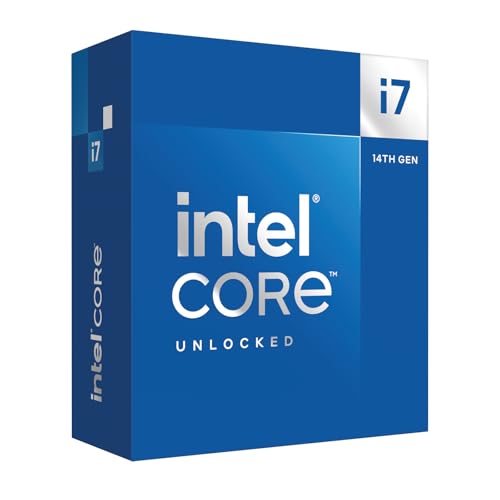
Buy a CPU when the build needs its main processor: the Intel i7-14700K offers 20 cores and up to 5.6 GHz. Buy a graphics card when the build needs its own video memory: all three cards here carry 16 GB of VRAM. The two parts do different jobs, so the choice turns on which job your build needs done.
The picks on each side
CPUs

Graphics Cards


Key differences
Clock speed: 5.6 GHz CPUs against 3.32 GHz GPUs
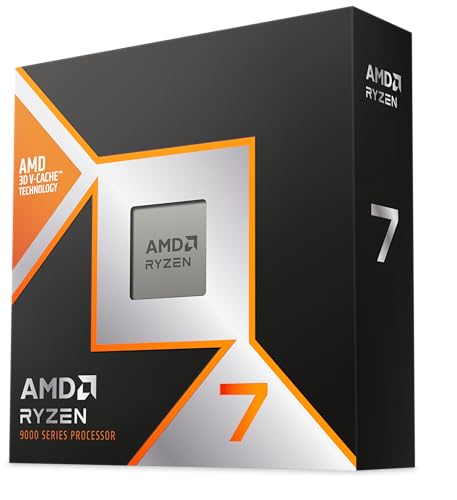
The Intel i7-14700K runs up to 5.6 GHz, the Ryzen 7 9800X3D up to 5.2 GHz and the Ryzen 7 5700X at 4.6 GHz Max Boost. The graphics cards run lower: the XFX RX 9060 XT boosts up to 3.32 GHz, the PNY RTX 5060 Ti to 2.69 GHz and the ASUS RTX 5060 Ti to 2.63 GHz in OC mode. Every CPU here lists a higher clock figure than every graphics card here, so clock speed alone does not settle which part a build needs.
Memory: DDR4 and DDR5 support against 16 GB VRAM
The Intel i7-14700K supports DDR4 and DDR5 platforms, and the Ryzen 7 5700X supports DDR4-3200. The graphics cards carry their own memory instead: all three list 16 GB, with GDDR6 on the XFX RX 9060 XT and GDDR7 on the ASUS and PNY RTX 5060 Ti cards. CPU memory depends on the motherboard and the memory fitted to it, while graphics card memory is fixed on the card.
Cooling: coolers not included against built-in fans
The Ryzen 7 9800X3D and the Ryzen 7 5700X both state that the cooler is not included, so a buyer must add one. The graphics cards carry their own cooling: the XFX RX 9060 XT uses a triple fan solution, the ASUS RTX 5060 Ti uses Axial-tech fans with 0dB technology, and the PNY RTX 5060 Ti uses dual fans. A CPU box without a cooler needs a separate cooling purchase, while each graphics card here arrives with fans fitted.
Which one to choose
Choose CPUs if
- You need 20 cores and 28 threads, as the Intel i7-14700K provides.
- You want up to 5.6 GHz with integrated Intel UHD Graphics 770.
- You want a 96MB L3 cache, as the Ryzen 7 9800X3D provides.
Choose Graphics Cards if
- You want 16 GB of GDDR7 memory, as the ASUS and PNY cards provide.
- You want a boost clock up to 3.32 GHz, as the XFX card provides.
- You want HDMI and DisplayPort outputs on the card itself.
FAQ
Do any of these CPUs include a cooler?
The Ryzen 7 9800X3D and the Ryzen 7 5700X both state that the cooler is not included, so a separate cooler is needed with either one.
How much VRAM do the graphics cards have?
All three graphics cards carry 16 GB: the XFX RX 9060 XT uses GDDR6, and the ASUS and PNY RTX 5060 Ti cards use GDDR7. The PNY card also states 448 GB/s of bandwidth.
Which CPU has the most cores here?
The Intel i7-14700K, with 20 cores made up of 8 P-cores and 12 E-cores, plus 28 threads. The Ryzen 7 9800X3D and Ryzen 7 5700X each have 8 cores and 16 threads.
Bottom line
Buy a CPU if the build needs its main processor: the Intel i7-14700K gives 20 cores and up to 5.6 GHz, while the Ryzen 7 9800X3D gives 8 cores with 96MB L3 cache. Buy a graphics card if the build needs video memory and outputs: all three cards here carry 16 GB of VRAM with HDMI and DisplayPort.
Keep comparing

Written by Nathan Reeve, WiseSplurge editor
Specs come from each maker's Amazon listing and were last checked on November 29, 2026. Each WiseScore (out of 10) blends those specs with Amazon sales data. We compare published figures rather than testing products in person.