Best Compact Studio Monitors (2026)

We earn a commission when you buy through our links, at no extra cost to you. As an Amazon Associate I earn from qualifying purchases.
Quick answer
The ADAM Audio D3V Active Desktop Studio Monitor is the pick for songwriters and producers who want 240W of total power on the desk, with 3.5-inch aluminum woofers and a 1.5-inch D-ART tweeter. Total power separates these monitors: 240W on the D3V, 100W on the PreSonus Eris 5, 50W on the Eris E4.5, and 42W on the Edifier R1280Ts. The D3V extends as low as 45 Hz.
Ranked at a glance
| # | Product | Woofer size | Total power | WiseScore | Link |
|---|---|---|---|---|---|
| 1 | 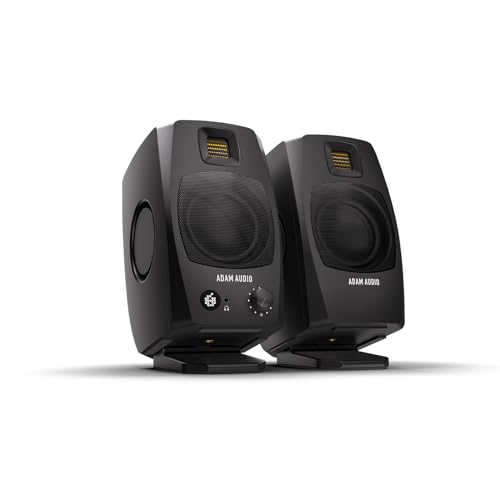 ADAM Audio D3V Active Desktop Studio MonitorBest Overall | — | 240 W | 9.1/10 | Check on Amazon → |
| 2 | — | 100 W | 9.0/10 | Check on Amazon → | |
| 3 | — | 50 W | 8.9/10 | Check on Amazon → | |
| 4 | 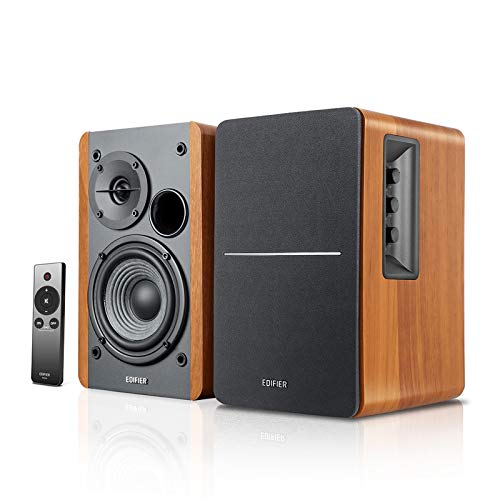 Edifier R1280Ts Powered Bookshelf SpeakersAlso Consider | — | 42 W | 8.8/10 | Check on Amazon → |

The lineup, one by one
ADAM Audio D3V Active Desktop Studio Monitor
The 240W D3V pairs 3.5-inch aluminum woofers and dual passive radiators with a 1.5-inch D-ART tweeter and USB-C input.
Why #1: Top figure in this lineup for total power (240 W). The rest of its WiseScore comes from Amazon sales data.
- Total power
- 240 W
Good fit if
- You want 240W of total power on your desk
- You want USB-C connection to computers and mobile devices
Look elsewhere if
- You need Bluetooth 5.0 wireless audio
- You need a 5.25-inch woofer for low end
The D3V is a fully active monitoring system with 240W of total power. Each pair features 3.5-inch aluminum woofers driven by 80W amplifiers, plus dual-sided 3.5-inch passive radiators that extend as low as 45 Hz. The 1.5-inch D-ART tweeter handles high frequencies, and the frequency range runs 45Hz to 23kHz at 97dB SPL. The left speaker backplate carries balanced 1/4-inch inputs and DSP-powered switches for placement issues, while the front panel holds a headphone socket and volume knob. USB-C connects the monitors to computers and mobile devices. Detachable stands angle the monitors 15° toward your ears, and a 3/8-inch threaded hole on the underside fits microphone stand mounting. The 20-minute auto sleep mode switches on or off with the latest firmware. The warranty runs 2 years standard, with a 5-year extension on registration.

PreSonus Eris 5 Bluetooth Powered Desktop Studio Monitor
The Eris 5 pairs 100W of Class D power with Bluetooth 5.0, 5.25-inch woven-composite woofers, and 1-inch silk-dome tweeters.
Why #2: No single top figure here; its WiseScore comes from its overall specs plus Amazon sales data.
- Total power
- 100 W
- Warranty
- 2 year
Good fit if
- You want Bluetooth 5.0 wireless audio
- You want ¼-inch TRS and RCA inputs together
Look elsewhere if
- You need 240W of total power
- You need a 3.5-inch aluminum woofer
The Eris 5 delivers 100W of Class D power at 50W per speaker. The 5.25-inch woven-composite woofers and 1-inch ultra-low mass silk-dome tweeters cover the range, with a wide sweet spot for stereo imaging. Bluetooth 5.0 carries wireless audio. The back panel offers ¼-inch TRS balanced inputs for professional audio devices and unbalanced RCA inputs for consumer electronics, plus a front-panel 1/8-inch TRS stereo aux input for a smartphone. A built-in headphone amp with a front-panel output supports private listening. High and Low Acoustic Tuning controls fine-tune the monitors to the room. A companion 8-inch subwoofer is available for more low end. The monitors suit multimedia, gaming, movies, and music production. The warranty runs 2 years.

PreSonus Eris E4.5-2-Way 4.5" Near Field Studio Monitor
The Eris E4.5 pairs 50W of Class AB power with 4.5-inch woofers and a 40-minute power saver.
Why #3: No single top figure here; its WiseScore comes from its overall specs plus Amazon sales data.
- Total power
- 50 W
- Warranty
- 1 year
Good fit if
- You want a 50W pair at 25W per side
- You want a front-panel headphone output
Look elsewhere if
- You need Bluetooth 5.0 wireless audio
- You need 100W of Class D power
The Eris E4.5 delivers 50W of Class AB dual amplification at 25W per side. The 4.5-inch woven-composite woofers and 1-inch low-mass silk-dome tweeters cover the range, with a wide listening sweet spot from nearly any angle. The back panel offers ¼-inch TRS balanced inputs for professional audio devices and unbalanced RCA inputs for consumer electronics, plus a front-panel 1/8-inch TRS stereo aux input for a phone. High- and low-frequency tuning controls customize the output for ears, room size, and speaker orientation. The front-panel headphone output and built-in headphone amplifier support headphone media reference. The 50W, 8-inch companion Eris Sub 8BT subwoofer adds low end and Bluetooth connectivity for a 2.1 system. Power saver mode engages after 40 minutes of idle time. The warranty runs 1 year.
Edifier R1280Ts Powered Bookshelf Speakers
The R1280Ts pairs 42W RMS with dual RCA inputs, a subwoofer line out, and side-panel EQ.
Why #4: No single top figure here; its WiseScore comes from its overall specs plus Amazon sales data.
- Total power
- 42 W
- Inputs
- RCA
- Warranty
- 2 Year
Good fit if
- You want dual RCA inputs for two devices
- You want a remote control for volume and mute
Look elsewhere if
- You need 100W of Class D power
- You need a 1/4-inch TRS balanced input
The R1280Ts delivers 42W of continuous undistorted power through a 4-inch sub-woofer unit and a 13mm silk dome tweeter unit. Dual RCA inputs connect two devices at the same time, so no plugging and unplugging is needed. A subwoofer output with automatic detection connects an external active subwoofer, and a built-in crossover activates when the subwoofer is connected. The updated remote control adjusts volume and mute from across the room. Bass, treble, and volume controls sit on the side panel, with a Soundfield Spatializer button and side panel knobs to adjust the EQ. The speakers are 2.0 stereo active near-field monitors. The wooden enclosure houses the pair. The warranty runs 2 years.
Worth the splurge, and what you can skip
Worth the splurge
- 240W of total power. The ADAM Audio D3V runs 240W of total power, so choose it when your desk setup needs more output than the 100W Eris 5.
- A 1.5-inch D-ART tweeter. The D3V carries a 1.5-inch D-ART tweeter, so choose it when your mixes need a ribbon tweeter rather than the 1-inch silk-dome tweeters on the PreSonus picks.
Fine to skip
- Bluetooth 5.0 wireless audio. If you connect through USB-C, the D3V connects to computers and mobile devices, and the Eris E4.5 connects through TRS, RCA, and aux inputs.
- A subwoofer line out. If you mix without a subwoofer, the Eris 5 covers the range with 5.25-inch woofers, and the D3V extends as low as 45 Hz.
Deciding factors for studio monitors
Total power and woofer size
Total power runs from 42W on the Edifier R1280Ts to 240W on the ADAM Audio D3V, with the PreSonus Eris 5 at 100W and the Eris E4.5 at 50W. The D3V runs 240W of total power with 3.5-inch aluminum woofers driven by 80W amplifiers, while the Eris 5 runs 100W at 50W per speaker and the Eris E4.5 runs 50W at 25W per side. Woofer size runs from 3.5 inches on the D3V to 5.25 inches on the Eris 5, with the Eris E4.5 at 4.5 inches and the Edifier at 4 inches. Tweeter size runs from a 13mm silk dome on the Edifier to a 1.5-inch D-ART tweeter on the D3V, with 1-inch silk-dome tweeters on both PreSonus picks. The D3V extends as low as 45 Hz.
Inputs and wireless options
Inputs decide what plugs into each monitor. The D3V connects to computers and mobile devices via USB-C, with balanced 1/4-inch inputs on the left speaker backplate and a headphone socket on the front panel. The Eris 5 adds Bluetooth 5.0 wireless audio, with 1/4-inch TRS balanced inputs, unbalanced RCA inputs, a front-panel 1/8-inch TRS stereo aux input, and a built-in headphone amp with a front-panel output. The Eris E4.5 matches that wired set with 1/4-inch TRS balanced inputs, unbalanced RCA inputs, a front-panel 1/8-inch TRS stereo aux input, and a front-panel headphone output. The Edifier R1280Ts offers dual RCA inputs and a subwoofer line out. The Eris 5 and the Eris E4.5 each pair with an 8-inch companion subwoofer.
Room tuning, stands, and sleep modes
Room tuning and placement decide how the monitors fit a desk. The D3V backplate carries DSP-powered switches for placement acoustics, and detachable stands angle the monitors 15° toward your ears, with a 3/8-inch threaded hole underneath for microphone stand mounting. The Eris 5 offers High and Low Acoustic Tuning controls, and the Eris E4.5 offers high- and low-frequency tuning controls for ears, room size, and speaker orientation. The Edifier R1280Ts puts bass, treble, and volume controls on the side panel, with a Soundfield Spatializer button and knobs to adjust the EQ. The D3V 20-minute auto sleep mode switches on or off, and the Eris E4.5 power saver mode engages after 40 minutes of idle time.
FAQ about studio monitors
How much power do compact studio monitors have?
Total power runs from 42W on the Edifier R1280Ts to 240W on the ADAM Audio D3V. The PreSonus Eris 5 runs 100W at 50W per speaker, and the Eris E4.5 runs 50W at 25W per side. The D3V woofers run on 80W amplifiers, and the Edifier delivers 42W of continuous undistorted power.
Which compact monitors have Bluetooth?
The PreSonus Eris 5 carries Bluetooth 5.0 wireless audio. The Eris E4.5 connects through 1/4-inch TRS, RCA, and a front-panel aux input, while its 50W, 8-inch companion Eris Sub 8BT subwoofer adds Bluetooth connectivity for a 2.1 system. The Edifier R1280Ts connects through dual RCA inputs. The D3V connects via USB-C.
How long is the warranty on compact studio monitors?
The ADAM Audio D3V carries a 2-year standard warranty, with an extension to 5 years on registration. The PreSonus Eris 5 carries a 2 year manufacturer warranty, and the Edifier R1280Ts carries a 2 Year Manufacturer warranty. The PreSonus Eris E4.5 carries a 1 year warranty.
Bottom line
Compare before you buy
Side-by-side comparisons that include studio monitors, checked with the same spec data.
Keep comparing
More audio & music guides, ranked with the same WiseScore method.

Written by Nathan Reeve, WiseSplurge editor
Specs come from each maker's Amazon listing and were last checked on November 29, 2026. Each WiseScore (out of 10) blends those specs with Amazon sales data. We compare published figures rather than testing products in person.