PreSonus vs Edifier Studio Monitors (2026)

We earn a commission when you buy through our links, at no extra cost to you. As an Amazon Associate I earn from qualifying purchases.
Quick answer
PreSonus fits a studio desk that needs more power: the Eris Studio 8 gives 140W with an 8-inch woofer, and every PreSonus here carries a 2-year warranty. Edifier fits a smaller desk: the R1280DB gives 42W with a 4-inch woofer, while the MR5 gives 110W with Bluetooth 6.0. Choose PreSonus for bigger woofers and more power, and Edifier for Bluetooth 6.0 and a smaller woofer.
Specs side by side
| Spec | PreSonus | Edifier |
|---|---|---|
| Woofer size | —, 8 in, 5.25 in | —, 5 in, — |
| Total power | 100 W, 140 W, 80 W | 42 W, 110 W, 80 W |
Each cell lists the figure for every pick on that side, in the order shown below.
The picks on each side
PreSonus

- Total power
- 100 W

- Woofer size
- 8 in
- Total power
- 140 W

- Woofer size
- 5.25 in
- Total power
- 80 W
Edifier
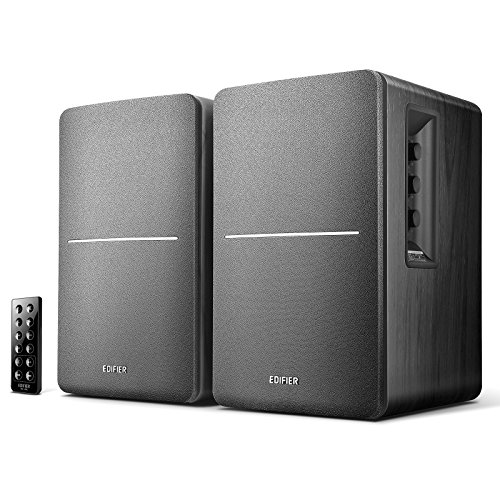
- Total power
- 42 W

- Woofer size
- 5 in
- Total power
- 110 W

Key differences
Total power output
PreSonus power runs 80W to 140W: the Eris Studio 5 gives 80W, the Eris 5BT gives 100W, and the Eris Studio 8 gives 140W. Edifier power runs 42W to 110W: the R1280DB gives 42W RMS, the MR4.5 gives 80W RMS, and the MR5 gives 110W RMS. The Eris 5BT splits its 100W as 50W per speaker, and the MR4.5 splits its 80W RMS as 30W by 2 plus 10W by 2. The Eris Studio 8 gives 140W, and the R1280DB gives 42W RMS.
Woofer size
PreSonus woofers run 5.25 inches to 8 inches: the Eris Studio 5 and the Eris 5BT use 5.25-inch woofers, and the Eris Studio 8 uses an 8-inch woofer. Edifier woofers run 4 inches to 5 inches: the R1280DB uses a 4-inch bass driver, the MR4.5 uses a 4.5-inch driver, and the MR5 uses a 5-inch woofer. The Eris Studio 8 and the Eris Studio 5 use woven-composite woofers, and the MR5 uses a long-throw woofer. The Eris Studio 8 uses an 8-inch woofer, and the R1280DB uses a 4-inch bass driver.
Bluetooth version
Bluetooth appears on both sides, in different versions. The PreSonus Eris 5BT uses Bluetooth 5.0 for wireless audio. The Edifier R1280DB has Bluetooth wireless, and the Edifier MR5 and MR4.5 use Bluetooth 6.0 with LDAC. The MR5 pairs Bluetooth 6.0 with multi-point connection, and the MR4.5 pairs Bluetooth 6.0 with multi-point pairing. The R1280DB connects over Bluetooth to an iPhone, Android, tablet, PC or Mac. The MR5 and MR4.5 give the newer Bluetooth version here at 6.0, against 5.0 on the Eris 5BT.
Which one to choose
Choose PreSonus if
- You want 140W with an 8-inch woofer from the Eris Studio 8
- You want a 2-year warranty on every monitor
- You want acoustic tuning controls on every monitor
Choose Edifier if
- You want Bluetooth 6.0 with LDAC from the MR5 or MR4.5
- You want a 4-inch woofer for a smaller desk
- You want a remote control for volume and inputs
FAQ
Which side gives more total power?
PreSonus. The Eris Studio 8 gives 140W, the Eris 5BT gives 100W, and the Eris Studio 5 gives 80W. Edifier runs 42W RMS on the R1280DB to 110W RMS on the MR5. The MR4.5 gives 80W RMS.
Which monitors have Bluetooth 6.0?
The Edifier MR5 and MR4.5 use Bluetooth 6.0 with LDAC. The PreSonus Eris 5BT uses Bluetooth 5.0, and the Edifier R1280DB has Bluetooth wireless. The MR5 and MR4.5 both support LDAC wireless audio.
Which side has the bigger woofer?
PreSonus. The Eris Studio 8 uses an 8-inch woofer, and the Eris Studio 5 and Eris 5BT use 5.25-inch woofers. Edifier woofers run 4 inches to 5 inches: the MR5 uses a 5-inch woofer and the R1280DB uses a 4-inch bass driver. The MR4.5 uses a 4.5-inch driver between them.
Bottom line
Buy PreSonus if you want more power and bigger woofers: the Eris Studio 8 gives 140W with an 8-inch woofer, and every PreSonus here carries a 2-year warranty. Buy Edifier if you want Bluetooth 6.0 with LDAC: the MR5 gives 110W RMS with a 5-inch woofer, and the R1280DB gives 42W RMS with a 4-inch bass driver.
Keep comparing

Written by Nathan Reeve, WiseSplurge editor
Specs come from each maker's Amazon listing and were last checked on November 29, 2026. Each WiseScore (out of 10) blends those specs with Amazon sales data. We compare published figures rather than testing products in person.