Renogy vs Jackery Solar Panels (2026)

We earn a commission when you buy through our links, at no extra cost to you. As an Amazon Associate I earn from qualifying purchases.
Quick answer
Renogy fits you if you need 400 W or 800 W of rated power from N-Type panel sets for an RV, cabin roof or off-grid system. Jackery fits you if you need a 100 W bifacial panel for a van, roof, balcony or RV. Rated power separates the sides, at 400 W to 800 W against 100 W.
Specs side by side
| Spec | Renogy | Jackery |
|---|---|---|
| Rated power | 400 W, 800 W, 400 W | 100 W, 100 W |
| Cell efficiency | 25%, 25%, 23% | 25%, 23% |
Each cell lists the figure for every pick on that side, in the order shown below.
The picks on each side
Renogy

- Rated power
- 400 W
- Cell efficiency
- 25%

- Rated power
- 800 W
- Cell efficiency
- 25%

- Rated power
- 400 W
- Cell efficiency
- 23%
Jackery

- Rated power
- 100 W
- Cell efficiency
- 25%
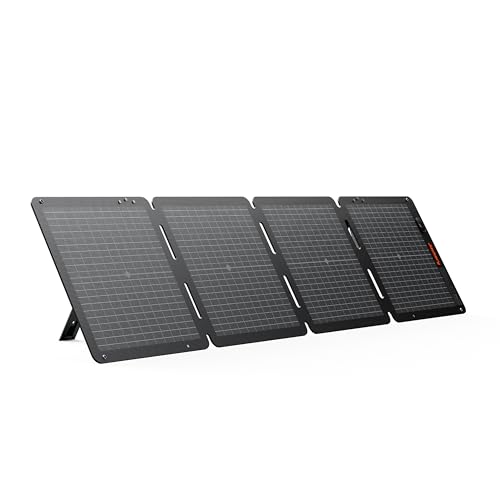
- Rated power
- 100 W
- Cell efficiency
- 23%
Key differences
Rated power
Renogy rates its sets at 400 W and 800 W. The Renogy Solar Panel 400 Watt N-Type combines 2 panels at 200 W each for 400 W rated power. The Renogy Solar Panel 800 Watt N-Type combines 4 panels at 200 W each for 800 W rated power. The Renogy 400W Portable Solar Panel has 400 W rated power in one foldable suitcase. Jackery rates each panel here at 100 W. The Jackery SolarSaga 100 Prime has 100 W rated power, and the Jackery SolarSaga 100W Air has 100 W rated power. The Renogy 800 W set weighs 93.6 lb.
Cell efficiency and cell type
Cell efficiency figures overlap across the sides. Renogy states 25% cell efficiency for the 400 Watt N-Type set and the 800 Watt N-Type set, with N-Type cells and 16BB technology. Renogy states 23% cell efficiency for the 400W Portable Solar Panel, with monocrystalline cells. Jackery states 25% conversion efficiency for the SolarSaga 100 Prime, with bifacial cells that generate from both surfaces. Jackery states 23% efficiency for the SolarSaga 100W Air, with bifacial PERC cells. The Renogy portable panel folds to 33.7 x 27.95 in.
Weight and folding design
Weight and folding figures differ by model. The Renogy 400W Portable Solar Panel weighs 30.2 lb, folds to 33.7 x 27.95 in, and includes a carry case and a kickstand. The Renogy 800 Watt N-Type set weighs 93.6 lb as a 4-panel set. The Jackery SolarSaga 100W Air weighs 7 lb, uses a W-fold design, and includes a carrying bag and an aluminum stand. The Jackery SolarSaga 100 Prime uses 12 mounting holes and includes a Z Bracket Kit for van installation. The Jackery Air states a 60s setup time.
Which one to choose
Choose Renogy if
- You need 400 W of rated power in a 2-panel set
- You need 800 W of rated power in a 4-panel set
- You want a 400 W foldable panel at 30.2 lb
Choose Jackery if
- You need a 100 W bifacial panel at 25% efficiency
- You want a 100 W folding panel at 7 lb
- You want 12 mounting holes and a Z Bracket Kit
FAQ
What rated power do Renogy and Jackery panels have here?
Renogy rates the 400 Watt N-Type set at 400 W, the 800 Watt N-Type set at 800 W, and the portable panel at 400 W. Jackery rates the SolarSaga 100 Prime at 100 W and the SolarSaga 100W Air at 100 W.
Which panels fold for camping and travel?
The Renogy 400W Portable Solar Panel folds to 33.7 x 27.95 in at 30.2 lb with a carry case. The Jackery SolarSaga 100W Air uses a W-fold design at 7 lb with a carrying bag and an aluminum stand.
What warranty do these solar panels carry?
The Renogy 400W Portable Solar Panel carries a 3-year materials and workmanship warranty. The Jackery SolarSaga 100 Prime includes a 5-year warranty. The Renogy N-Type sets have a 25-year 80% output figure.
Bottom line
Buy Renogy if your system needs 400 W or 800 W of rated power, or a 400 W foldable suitcase at 30.2 lb for RV and off-grid use. Buy Jackery if your setup needs a 100 W bifacial panel, or a 100 W folding panel at 7 lb for camping and travel.
Keep comparing

Written by Nathan Reeve, WiseSplurge editor
Specs come from each maker's Amazon listing and were last checked on November 29, 2026. Each WiseScore (out of 10) blends those specs with Amazon sales data. We compare published figures rather than testing products in person.