Home/Outdoors & Camping/Fish Finders
Fish Finders
Our main fish finders guide is pinned first. The other 13 narrow the list to a specific need.
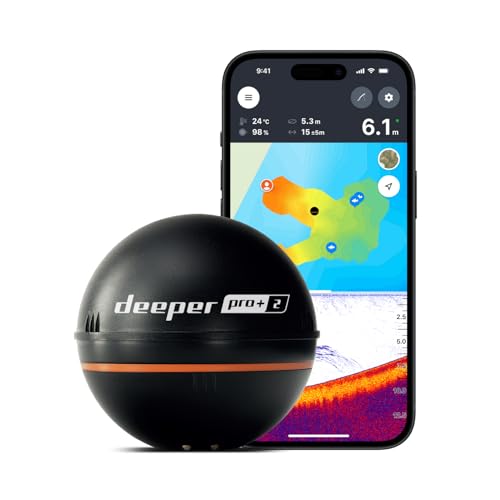
Best Fish Finder (2026)
Top pick: Deeper PRO+ 2 Sonar Fish Finder

Best Fish Finder for Ice Fishing (2026)
Top pick: Garmin 010-01550-00 Striker 4

Best Marine Fish Finder (2026)
Top pick: Garmin Striker Vivid 9sv

Best Side Imaging Fish Finder (2026)
Top pick: Minn Kota X Series 9 GPS Fish Finder
Best Portable Fish Finder for Small Boat (2026)
Top pick: Deeper PRO+ 2 Sonar Fish Finder
Best GPS Fish Finder (2026)
Top pick: Garmin Striker Vivid 9sv
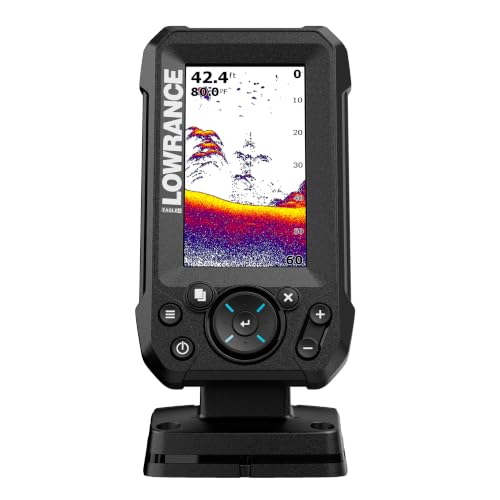
Best Fish Finder for Bass Boat (2026)
Top pick: Lowrance Eagle 4X Fish Finder
Best Kayak Fish Finder with Side Imaging (2026)
Top pick: Minn Kota X Series 9 GPS Fish Finder

Best 7 Inch Chartplotter Fishfinder (2026)
Top pick: Minn Kota X Series 7 GPS Fish Finder

Best 9 Inch Chartplotter Fishfinder (2026)
Top pick: Simrad NSS9 Evo3S

Best Imaging Fish Finder (2026)
Top pick: Lowrance Eagle Eye 9 Live Fish Finder

Best Touch Screen Fish Finder (2026)
Top pick: Lowrance HDS PRO 9 Fish Finder

Best Fish Finder for Inflatable Boat (2026)
Top pick: LUCKY Wireless Handheld Fish Finder

Best Fish Finder with Maps (2026)
Top pick: Lowrance Eagle 5 SplitShot HD Fish Finder
How to choose a fish finder
Fish finders in this category separate first by form: handheld and castable sonar units sit beside console chartplotters with screens from 3.5 inches to 16 inches. Sonar runs from single-beam and dual frequency designs to CHIRP with side and down imaging. Rated depth, beam angle, and power source then decide what each unit can show and where you can run it.
Depth rating versus imaging distance
Two different depth figures appear on these units, and they answer different questions. Maximum depth is how far below the transducer the sonar is rated to read. Across this category that rating runs from 125 ft on the Humminbird Helix 7 G4N to 1600 ft on the Garmin Striker 4, with portable units in between at 147 ft, 328 ft, and 330 ft, and the JOYWEE FF688C at 240 ft. Imaging distance is separate: it describes how far a side or down view extends from the boat. The Helix 7 G4N is rated for views 125 feet on either side and 125 feet beneath the boat, while the Minn Kota X Series 7 is rated for 400-ft underwater views. Deep open water calls for the depth rating; scanning structure beside the boat calls for imaging distance, and the two figures top out at 400 ft and 1600 ft.
Beam angle and sonar frequency
Beam angle sets the width of the cone of water a sonar samples at one moment, and frequency sets which cone you get on dual frequency units. The LUCKYLAKER Wired Sensor pairs a 20 degree beam at 200 kHz with a 60 degree beam at 83 kHz, so one transducer covers both a narrow and a wide view. The JOYWEE FF688C uses the same 200KHz/83KHz pairing. Single-beam designs fix the choice: the LUCKY Wireless Kayak unit runs 125kHz through a 90 degree beam, and the Lowrance Eagle 4X runs its 200 kHz Bullet Skimmer at 44 degrees. Dual Beam models such as the Humminbird PiranhaMAX 4 let you pick a narrow beam for detail or a wide beam for coverage area. Beam angles here span 20 degrees to 90 degrees.
Power source and rated runtime
How a fish finder gets power decides where you can use it. Console units such as the Garmin Striker Vivid 7sv include a power/data cable, so the unit runs from the boat supply at a fixed mount. Portable and wireless units carry rechargeable batteries instead: the LUCKY Portable Sonar Fish Finder, LUCKY Wireless Handheld Fish Finder, and LUCKY Water Depth Fish Finder are maker-rated at 5 to 6 hours of continuous work after a full charge, and longer than 10 hours with battery save mode on. The Deeper PRO+ 2 carries a 9 hour battery life figure, and the Humminbird PiranhaMAX 4 portable case includes a 7 Amp Hour battery and wall charger. A cable suits a permanent helm install; a battery suits ice, kayak, and bank fishing away from boat power, with rated runtime topping out past 10 hours.