Best Enterprise Nas (2026)

We earn a commission when you buy through our links, at no extra cost to you. As an Amazon Associate I earn from qualifying purchases.
Quick answer
Choose the Synology DS1825+ Enterprise Video Production & Storage for a video team that edits 4K and 8K projects together: it supports 50+ concurrent users at 2,239 MB/s and grows from 160TB to 360TB with expansion units. The Asustor Lockerstor 4 Gen3 AS6804T pairs 16GB ECC DDR5 with dual 5GbE and a 10GbE port for video editing and virtualization, while the Synology NAS Rackstation carries a 5-year warranty.
Ranked at a glance
| # | Product | Drive bays | Storage | WiseScore | Link |
|---|---|---|---|---|---|
| 1 | 8 bays | — | 9.4/10 | Check on Amazon → | |
| 2 |  Asustor Lockerstor 4 Gen3 AS6804TSecond Pick | 4 bays | — | 9.3/10 | Check on Amazon → |
| 3 |  QNAP TS-832PXU-RP-4G 8 Bay Rackmount NASAlso Consider | 8 bays | — | 9.2/10 | Check on Amazon → |
| 4 | 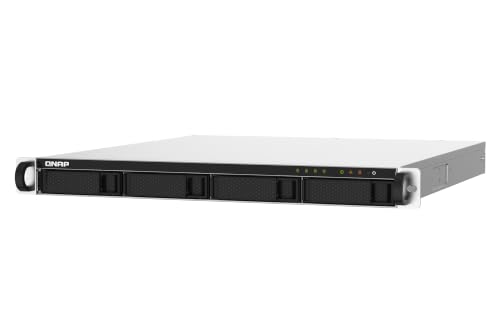 QNAP TS-432PXU-2G 4 Bay Rackmount NASAlso Consider | 4 bays | — | 9.0/10 | Check on Amazon → |
| 5 |  Synology NAS RackstationAlso Consider | 4 bays | — | 8.9/10 | Check on Amazon → |

The lineup, one by one

Synology DS1825+ Enterprise Video Production & Storage
Eight bays, 50+ concurrent users at 2,239 MB/s, and growth to 360TB fit a video team editing 4K and 8K together.
Why #1: Top figure in this lineup for drive bays (8 bays). The rest of its WiseScore comes from Amazon sales data.
- Drive bays
- 8 bays
- Warranty
- 3-Year
Good fit if
- You edit 4K and 8K projects with 50+ users at once
- You need storage that grows from 160TB to 360TB
Look elsewhere if
- You need 10GbE ports installed out of the box
- You need a warranty longer than 3 years
The Synology DS1825+ Enterprise Video Production & Storage holds 8 bays and runs as a diskless NAS, so you add your own drives. It supports 50+ concurrent users editing 4K and 8K projects with 2,239 MB/s speeds, and it runs databases, virtual machines, and media services at the same time. Storage grows from 160TB to 360TB using expansion units. Networking comes through 10GbE or 25GbE upgrade cards, so you pick the card that matches your team. High-availability clustering, automated failover, and backup protect the data. The warranty runs 3 years, with dedicated technical account management for business-critical production environments.
Asustor Lockerstor 4 Gen3 AS6804T
Sixteen gigabytes of ECC DDR5, 4 M.2 NVMe slots, and dual 5GbE plus a 10GbE port suit a creator team running virtual machines.
Why #2: Top figure in this lineup for memory (16 GB). The rest of its WiseScore comes from Amazon sales data.
- Drive bays
- 4 bays
- Memory
- 16 GB
Good fit if
- You run virtual machines and Docker containers on your NAS
- You edit video with 16GB ECC DDR5 memory
Look elsewhere if
- You need 8 drive bays for your archive
- You need a rackmount unit for a server rack
The Asustor Lockerstor 4 Gen3 AS6804T holds 4 bays in a compact desktop form factor and runs as a diskless NAS. An AMD Ryzen 3.8GHz quad-core processor pairs with 16GB ECC DDR5 memory, and the unit carries 4 M.2 NVMe slots. Dual 5GbE and a 10GbE port carry network traffic for editing, virtualization, AI workloads, Docker containers, and enterprise backup. The unit suits video editing and business storage in a small footprint, with workstation-class NAS performance in a desktop box.
QNAP TS-832PXU-RP-4G 8 Bay Rackmount NAS
Eight 3.5-inch SATA bays, two 10GbE SFP+ ports, and two 2.5GbE ports fit a rackmount setup for small business file sharing.
Why #3: Top figure in this lineup for drive bays (8 bays). The rest of its WiseScore comes from Amazon sales data.
- Drive bays
- 8 bays
- Memory
- 4 GB
- Warranty
- 3 year
Good fit if
- You mount an 8-bay NAS in a server rack
- You connect over two 10GbE SFP+ ports
Look elsewhere if
- You need 16GB of memory installed
- You need a 5-year warranty on the unit
The QNAP TS-832PXU-RP-4G 8 Bay Rackmount NAS holds 8 bays for 3.5-inch SATA drives at 6Gb/s. An AnnapurnaLabs Alpine AL324 ARM Cortex-A57 quad-core processor runs at 1.7GHz, with 4GB UDIMM DDR4 RAM that expands to a 16GB maximum. Two 2.5 Gigabit Ethernet ports and two 10 Gigabit Ethernet SFP+ ports carry network traffic. The rackmount form fits a server rack, and the warranty runs 3 years.
QNAP TS-432PXU-2G 4 Bay Rackmount NAS
Four 3.5-inch SATA bays, two 10GbE SFP+ ports, and two 2.5GbE ports fit a smaller rackmount setup for business file sharing.
Why #4: No single top figure here; its WiseScore comes from its overall specs plus Amazon sales data.
- Drive bays
- 4 bays
- Memory
- 2 GB
- Warranty
- 3 year
Good fit if
- You mount a 4-bay NAS in a server rack
- You run a small office on 2GB DDR4 memory
Look elsewhere if
- You need 8 drive bays for your archive
- You need more than 2GB of memory installed
The QNAP TS-432PXU-2G 4 Bay Rackmount NAS takes the AnnapurnaLabs Alpine AL324 ARM Cortex-A57 quad-core processor at 1.7GHz, with 2GB UDIMM DDR4 RAM that expands to a 16GB maximum. It holds 4 bays for 3.5-inch SATA drives at 6Gb/s, with two 2.5 Gigabit Ethernet ports and two 10 Gigabit Ethernet SFP+ ports. The rackmount form fits a server rack, and the warranty runs 3 years.
Synology NAS Rackstation
Eight gigabytes of DDR4, a 1U rackmount form, and a 5-year warranty fit a growing business that needs ECC memory.
Why #5: No single top figure here; its WiseScore comes from its overall specs plus Amazon sales data.
- Drive bays
- 4 bays
- Memory
- 8 GB
- Warranty
- 5-year
Good fit if
- You want a 5-year warranty on your NAS
- You need ECC memory up to 64GB
Look elsewhere if
- You need 16GB of memory installed
- You need 10GbE ports installed out of the box
The Synology NAS Rackstation (RS1619xs+) holds 4 bays in a 1U rackmount form for growing businesses. A quad-core CPU with AES-NI pairs with 8 GB of DDR4 ECC UDIMM, expandable to 64 GB. Built-in M.2 NVMe and SATA SSD slots support system cache for the installed drives. An optional 10GbE NIC is available, and the unit scales up to 16 drives with Synology RX1217 or RX1217RP expansion units. The warranty runs 5 years, with Synology replacement service included.
Worth the splurge, and what you can skip
Worth the splurge
- 8 drive bays. The Synology DS1825+ and the QNAP TS-832PXU-RP-4G are the picks with 8 bays, so choose one when your archive needs more drives than a 4-bay unit holds.
- 16GB ECC DDR5 memory. The Asustor AS6804T is the pick with 16GB ECC DDR5 memory, so choose it when your virtual machines and Docker containers need 16GB of installed memory.
Fine to skip
- 25GbE upgrade cards. If your switch runs 10GbE or slower, the DS1825+ runs on 10GbE upgrade cards, and the QNAP units already carry 10GbE SFP+ ports, so 25GbE adds speed your network does not call for.
- M.2 NVMe slots. If your storage runs on the drive bays alone, the QNAP TS-832PXU-RP-4G covers 8 SATA bays with 4GB of memory, so M.2 slots add a feature your setup does not call for.
Deciding factors for network attached storage
Drive bays and expansion units
Bay count sets how many drives the unit holds before you add expansion. The Synology DS1825+ and the QNAP TS-832PXU-RP-4G each hold 8 bays, while the Asustor AS6804T, the QNAP TS-432PXU-2G, and the Synology RS1619xs+ each hold 4 bays. Growth to 360TB comes from expansion units on the DS1825+, and the RS1619xs+ scales up to 16 drives with Synology RX1217 or RX1217RP expansion units. QNAP TS-832PXU-RP-4G and TS-432PXU-2G take 3.5-inch SATA drives at 6Gb/s, so check your drive size against the bay figure. Count the drives you own today and the drives you plan to add, then match that total against the bay figure and the expansion figure.
Memory and processors
Memory decides how many services run at once, and the figures here differ by pick. Asustor AS6804T pairs an AMD Ryzen 3.8GHz quad-core processor with 16GB ECC DDR5 memory. Synology RS1619xs+ carries 8 GB of DDR4 ECC UDIMM that expands to 64 GB, with a quad-core CPU and AES-NI. QNAP TS-832PXU-RP-4G carries 4GB UDIMM DDR4 RAM with a 16GB maximum, and the QNAP TS-432PXU-2G carries 2GB UDIMM DDR4 RAM with the same 16GB maximum. Both QNAP units use an AnnapurnaLabs Alpine AL324 ARM Cortex-A57 quad-core processor at 1.7GHz. The 16GB maximum on both QNAP units leaves room to grow the installed memory later.
Networking ports and warranty terms
Network ports decide how the NAS connects to your switch, and the figures here differ by pick. The Asustor AS6804T carries dual 5GbE and a 10GbE port, while the QNAP TS-832PXU-RP-4G and TS-432PXU-2G each carry two 2.5 Gigabit Ethernet ports and two 10 Gigabit Ethernet SFP+ ports. Synology DS1825+ offers 10GbE or 25GbE network upgrade cards, and the Synology RS1619xs+ offers an optional 10GbE NIC. Warranty terms run 3 years on the DS1825+ and both QNAP units, and 5 years on the RS1619xs+. Port counts on this page are 3 on the AS6804T and 4 on each QNAP unit here.
FAQ about network attached storage
How many drive bays do these NAS units have?
The Synology DS1825+ and the QNAP TS-832PXU-RP-4G each hold 8 bays. Asustor AS6804T, QNAP TS-432PXU-2G, and Synology RS1619xs+ each hold 4 bays. The DS1825+ grows from 160TB to 360TB with expansion units, and the RS1619xs+ scales to 16 drives with RX1217 expansion units.
How much memory do these NAS units carry?
Asustor AS6804T carries 16GB ECC DDR5 memory. Synology RS1619xs+ carries 8 GB of DDR4 ECC UDIMM that expands to 64 GB. QNAP TS-832PXU-RP-4G carries 4GB UDIMM DDR4 RAM, and the QNAP TS-432PXU-2G carries 2GB, both with a 16GB maximum.
What warranty terms do these NAS units carry?
The Synology DS1825+, the QNAP TS-832PXU-RP-4G, and the QNAP TS-432PXU-2G each carry a 3-year warranty. The Synology RS1619xs+ carries a 5-year limited warranty with Synology replacement service. Compare the 3-year and 5-year terms against how long you plan to keep the unit.
Bottom line
Compare before you buy
Side-by-side comparisons that include network attached storage, checked with the same spec data.
Keep comparing
More computers & office guides, ranked with the same WiseScore method.

Written by Nathan Reeve, WiseSplurge editor
Specs come from each maker's Amazon listing and were last checked on November 29, 2026. Each WiseScore (out of 10) blends those specs with Amazon sales data. We compare published figures rather than testing products in person.