Home/Audio & Music/Studio Microphones
Studio Microphones
Our main studio microphones guide is pinned first. The other 1 narrow the list to a specific need.

How to choose a studio microphone
Studio microphones in this lineup separate on how quietly they capture soft sound, how they handle interference, and how they are built. Self-noise is documented at 4.5dBA on the Rode NT1 Signature. Shielding, transient response, and metal construction vary just as much across this lineup. Those traits decide which microphone fits the room you record in.
Self-noise and quiet sources
Self-noise is the hiss a microphone adds to a recording, and it matters most on quiet sources such as soft vocals and voiceover, where the noise floor sits close to the performance. One self-noise figure is documented in this lineup: 4.5dBA on the Rode NT1 Signature, described as among the lowest self-noise microphones ever made. The Rode NT1 5th Gen states extremely low self-noise and pairs it with an ultra-low-noise, high-gain Revolution Preamp. When your sources are quiet, weigh the 4.5dBA figure of the Signature against the 5th Gen's stated low self-noise; when your sources are loud, self-noise matters less and other traits decide.
Interference shielding and build
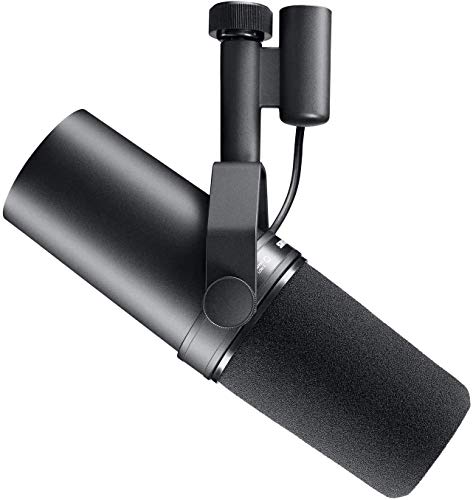
Shielding decides how clean a recording stays near phones, laptops, and Wi-Fi routers. The Shure SM4 uses patent-pending interference shielding that keeps RF noise from cell phones, laptops, and Wi-Fi routers out of the recording. The Shure SM7B uses electromagnetic shielding that helps prevent hum and interference, also in a rugged all-metal body. The Rode NT1 5th Gen body is machined from high-grade aluminum with nickel plating and a ceramic coating. The Melon Audio MA-67 uses a solid metal exterior with a solid grill resilient to dents. The SM4 pairs its shielding with rugged all-metal construction and a brass 1-inch dual-diaphragm capsule.
Transient response and detail
Transient response is how quickly a microphone follows sharp sounds such as drums and guitars, and it matters most when you record instruments. The Audio-Technica AT2020 pairs a custom engineered low-mass diaphragm with extended frequency response and superior transient response. The Shure SM4 pairs a brass 1-inch dual-diaphragm capsule with clean, controlled low-end frequencies and smooth, detailed highs. The Rode NT1 5th Gen carries the classic warm, silky character of the NT1 line. Fast transients suit drums and guitars, while smooth highs suit voiceovers. The capsule figures are a low-mass diaphragm on the AT2020 and a brass 1-inch dual-diaphragm capsule.