Home/Audio & Music/Alto Saxophones
Alto Saxophones
Our main alto saxophones guide is pinned first. The other 1 narrow the list to a specific need.
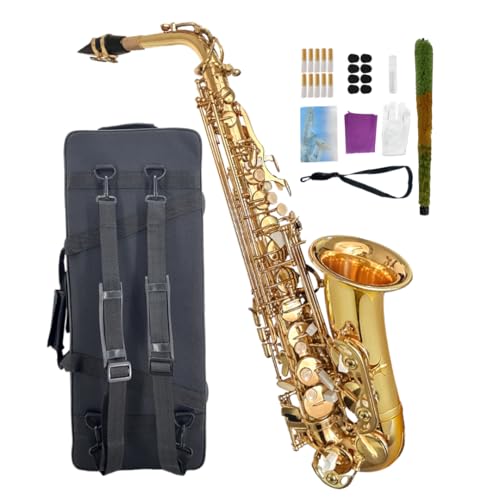

How to choose a alto saxophone
Alto saxophones here differ in who they are built for, what music they suit, and how they feel under the fingers. The choice turns on the player's level, the genres the horn covers, and the key action, not on a single standout feature. The sections below explain each decision with the stated range across the horns in this category.
Match the horn to the player's level
The stated level runs from beginner student models to a professional intermediate model. The Eastar AS-II is a Beginner Student model, the VEVOR suits beginners and hobbyists, and the WUQIMUSC suits first-time adult students. At the other end, the Eastar AS-III is a Professional Intermediate model, while the YoungMonic and EASTROCK span beginners to professionals, and the Jean Paul suits beginners or advancing players. A beginner horn stresses easy playability and a quick response for daily practice, so a first-time player looks for ergonomic keys and a responsive action. An advancing player looks for construction that holds up to daily practice and performance, such as double-braced low keys. Match the stated level to the player's current playing, not to a level they hope to reach.
Sound for the music you play
Genre coverage runs from solo practice to jazz, classical and contemporary performance. The YoungMonic covers jazz and rock to classical, the Eastar AS-III covers jazz, classical or pop, and the EASTROCK covers jazz, blues, classical and contemporary music. The Eastar AS-II suits jazz, swing or solo performance, and the VEVOR suits swing and jazz ensembles to solo performance. Intonation is the other half of sound: the Jean Paul is built for accurate intonation across the entire range, and the WUQIMUSC is built for accurate intonation. Smooth movement between notes matters too: the AS-III gives smooth transitions across all registers, and the AS-II gives smooth low-to-high transitions. Pick the genre coverage and the intonation the music you play calls for.
Key feel, response and setup
Key feel runs from ergonomic layouts to responsive actions across the page. The YoungMonic pairs an ergonomic design with responsive keys, the Eastar AS-III pairs an ergonomic keys layout with a fast response, and the Eastar AS-II pairs an ergonomic design with a quick response. Keys shaped with ergonomics in mind give the VEVOR a smooth response, while the WUQIMUSC and LeSage each give a responsive key action. Factory adjustment is the other check: the EASTROCK and LeSage horns are professionally adjusted before leaving the factory. Corks to remove before use come on the Eastar AS-II and AS-III. Check the key feel against the player's hands, and check the adjustment and corks before the first note.